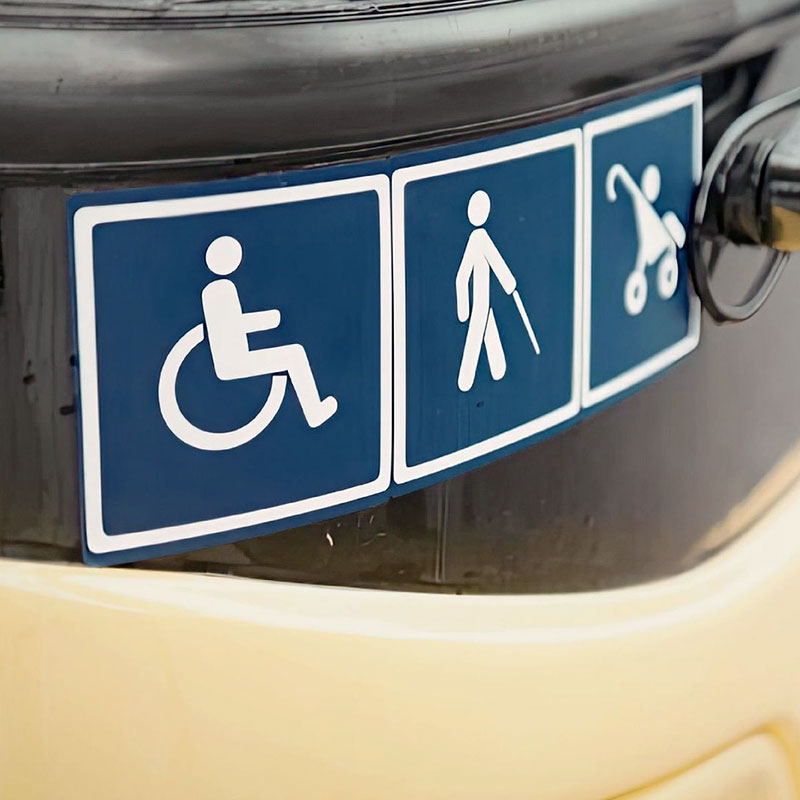
When most people think about accessible air travel, they immediately think of wheelchair assistance. While mobility services remain an important part of airport accessibility, today’s travelers face a much broader range of challenges that are often invisible to others.
As airports become larger, busier and more technologically complex, travelers with vision impairments, hearing impairments, cognitive challenges and hidden disabilities are increasingly seeking personalized support to help them navigate the travel experience with confidence.
Accessibility is no longer defined solely by physical mobility. It is about ensuring that every traveler can move through the airport safely, comfortably and with dignity.
This evolving understanding of accessibility is creating new opportunities for personalized airport assistance provided by trained concierge professionals who recognize that every traveler has unique needs.
Accessibility Is Evolving
The travel industry has made significant progress in improving accessibility over the past several decades. Ramps, elevators, wheelchair assistance programs and accessible facilities have become standard features at airports around the world.
Yet accessibility continues to evolve.
Today’s airports are complex environments filled with self-service kiosks, mobile boarding passes, biometric screening systems, security checkpoints, changing gate assignments and sprawling terminals. For some travelers, these innovations increase convenience. For others, they can create new challenges.
As awareness grows around non-visible disabilities and diverse traveler needs, the conversation is expanding beyond mobility assistance to include sensory, cognitive and communication challenges as well.
Supporting Travelers with Vision Impairments
For travelers with limited vision or blindness, navigating a busy airport can present unique challenges. Terminal layouts vary from airport to airport, and signage, gate changes and crowded concourses can make independent navigation difficult.
Air General Traveler Services (AGTS) provides personalized guidance throughout the airport journey, helping travelers move confidently through check-in, security screening and gate areas while staying informed about important travel updates.
The value extends beyond navigation. Personalized assistance helps travelers feel more comfortable, more informed and more in control throughout their journey, particularly when traveling through unfamiliar airports.
Assisting Travelers with Hearing Impairments
Airports rely heavily on audio announcements to communicate boarding information, gate changes and operational updates. While digital displays and mobile technology have improved accessibility, important information can still be difficult to access in real time.
AGTS concierge professionals help travelers stay informed by monitoring flight activity, communicating schedule changes and providing support throughout the airport experience.
This additional layer of communication can help travelers avoid missed connections, reduce uncertainty and create a smoother journey overall.
Supporting Travelers with Cognitive Challenges
Travel can be especially demanding for individuals with cognitive disabilities, developmental differences or neurodiverse conditions.
Busy terminals, unfamiliar routines, crowded environments and multiple travel steps can quickly become overwhelming.
Travelers on the autism spectrum, individuals with intellectual disabilities and those experiencing memory-related challenges often benefit from personalized support that breaks the airport journey into manageable stages.
AGTS concierge professionals provide clear communication, consistent guidance and a reassuring presence throughout the travel process. By helping travelers understand what comes next and assisting with airport procedures, they help create a more predictable and comfortable experience.
Recognizing Hidden Disabilities
Not every disability is visible.
Millions of travelers live with conditions that may not be immediately apparent, including neurological disorders, chronic illnesses, hearing loss, traumatic brain injuries and other medical conditions that can affect the travel experience.
Because these challenges are often unseen, travelers may hesitate to request assistance or may not realize support options are available.
Personalized concierge assistance helps bridge that gap by focusing on the individual rather than the condition. Every traveler has unique circumstances, and support can be tailored accordingly.
This individualized approach reflects a broader shift in how the travel industry views accessibility — not as a checklist of services, but as a commitment to understanding and accommodating diverse needs.
The Human Connection Matters
Technology continues to transform the airport experience, but accessibility often comes down to something much more fundamental: human connection.
A knowledgeable concierge professional can provide reassurance, answer questions, coordinate logistics and help travelers navigate unexpected situations that technology alone cannot always address.
For many travelers, having a trusted person available to assist along the way can make the difference between a stressful journey and a positive travel experience.
This is particularly important for travelers who may not require traditional mobility assistance but still benefit from personalized support.
A More Inclusive Future for Air Travel
The future of airport accessibility extends well beyond ramps and wheelchairs.
As airports and airlines continue to recognize the diverse needs of today’s travelers, personalized support services will play an increasingly important role in creating more inclusive travel experiences.
At Air General Traveler Services, our culture of concierge care is built on the belief that every traveler deserves personalized attention and support.
Whether assisting travelers with vision impairments, hearing impairments, cognitive challenges or hidden disabilities, AGTS helps make airport navigation more comfortable, more accessible and more empowering so every traveler feels supported, respected and able to travel with confidence.
We’re pleased to greet you.